
 Save to Pinterest
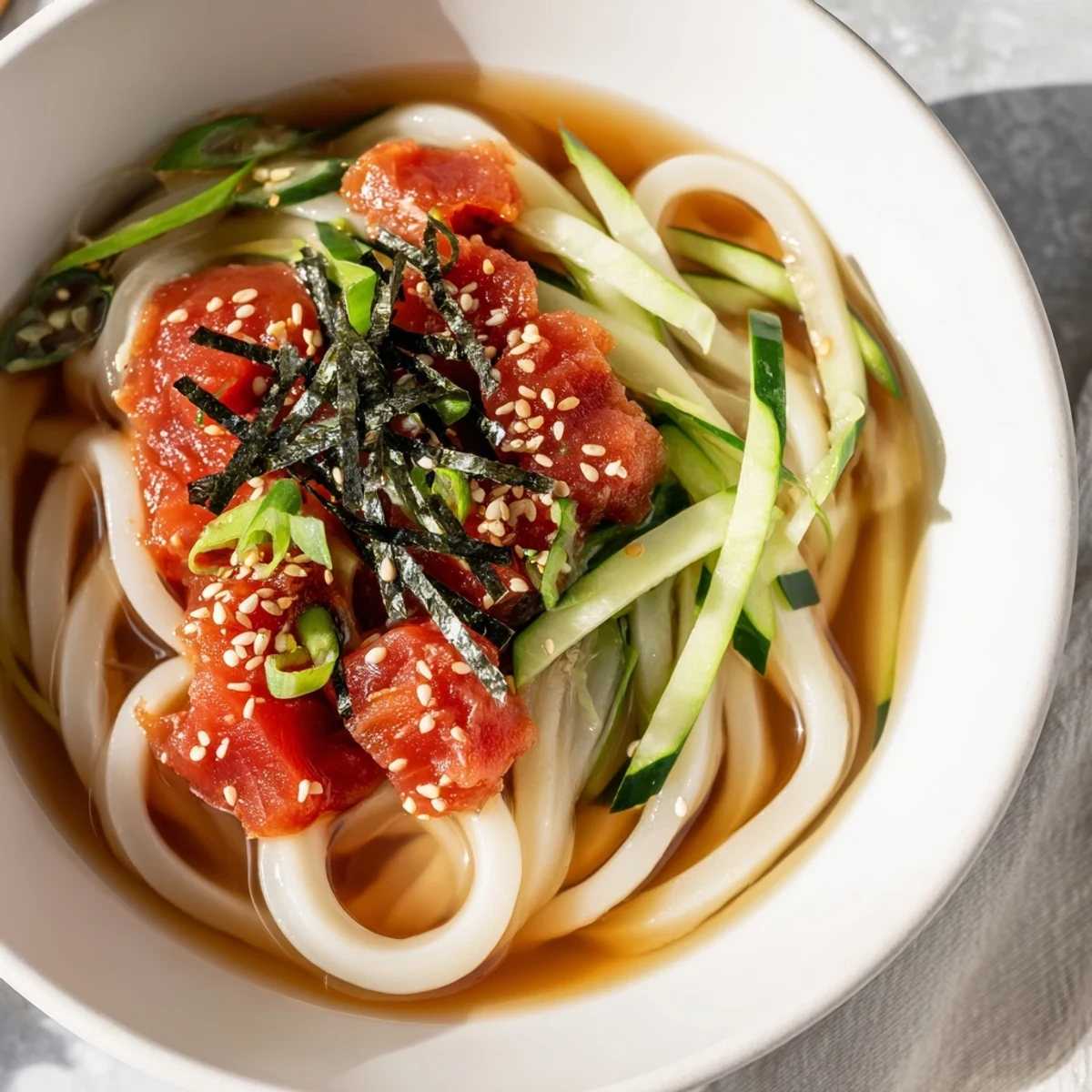
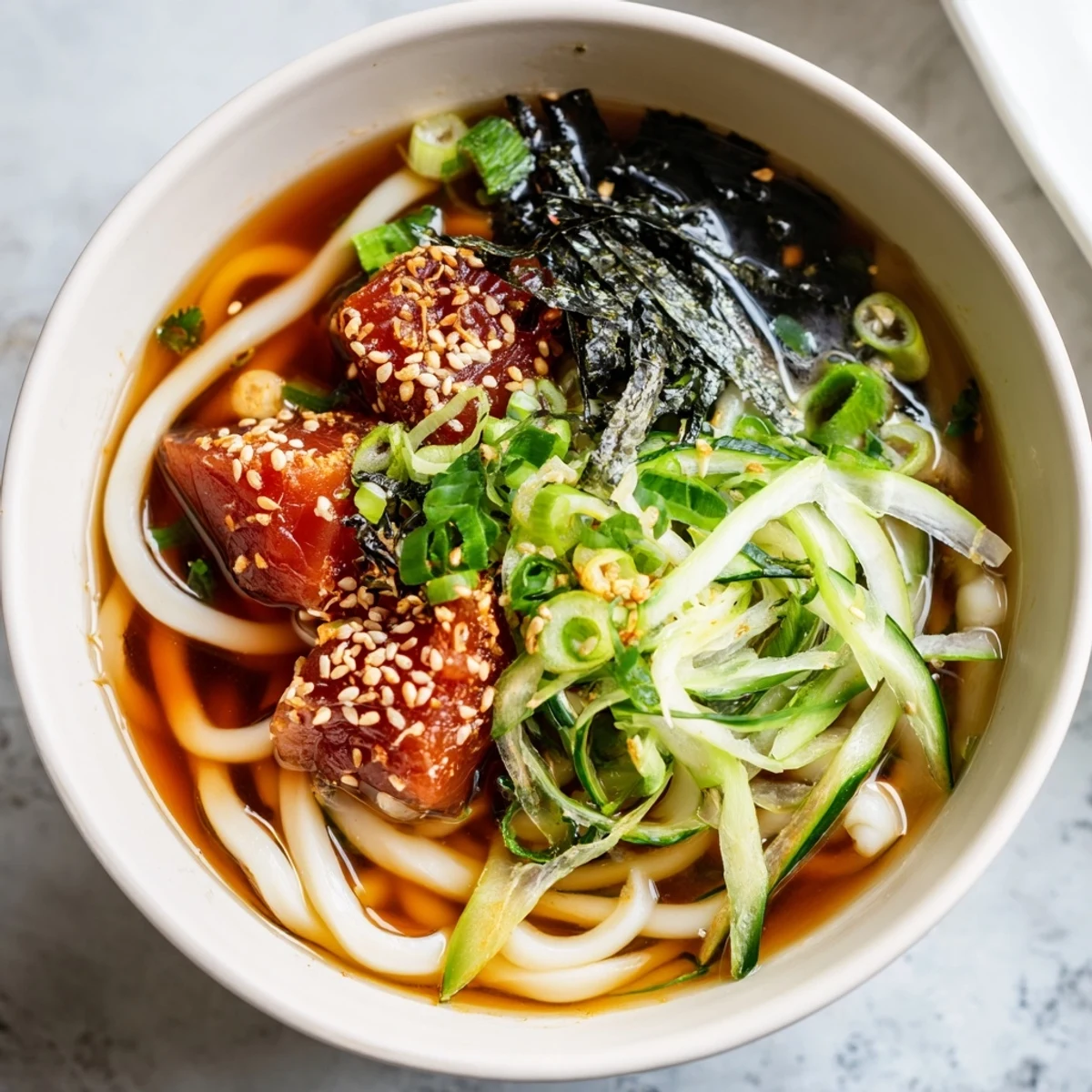
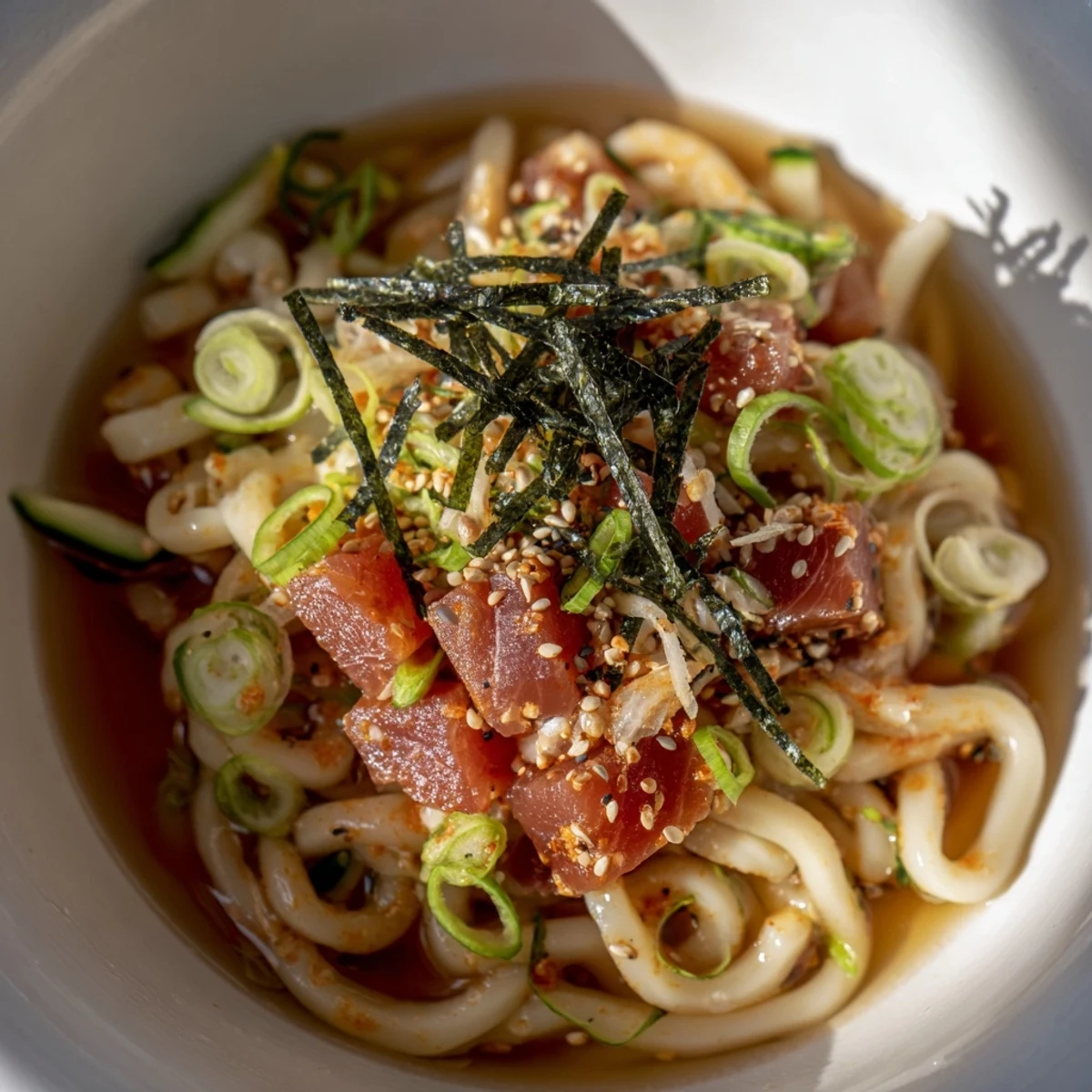
 This Japanese-inspired bowl combines thick, chewy udon noodles in a savory dashi broth with spicy marinated sushi-grade tuna. The tuna gets its kick from a creamy Sriracha-mayo blend, while fresh toppings like green onions, cucumber, nori, and sesame seeds add crunch and umami depth. Perfect for a quick weeknight dinner that feels restaurant-quality.
The smell of dashi hitting a hot saucepan still transports me straight back to a tiny ramen stall I stumbled into during a rainy evening in Osaka, where the steam fogged up the windows and the cook barely looked up as he slid a bowl toward me. That broth was revelatory, and I spent months trying to recreate something even close at home. This spicy tuna udon is what eventually emerged from that obsession, a bowl that bridges the gap between that trip and my own small kitchen on a weeknight.
My roommate walked in one evening while I was tossing the tuna in its sriracha mayo marinade and accused me of making something far too fancy for a Tuesday. She ended up eating the entire second bowl before I could claim it.
Ingredients
- Sushi grade tuna (200 g, diced): Freshness is everything here because the tuna is essentially raw, so buy from a fishmonger you trust and use it the same day.
- Mayonnaise, preferably Japanese Kewpie (2 tbsp): Kewpie has a richer yolk content and tang that standard mayo lacks, and it makes the spicy tuna mixture creamier.
- Sriracha or Asian chili sauce (1 tbsp): This is your heat dial, so adjust up or down depending on your tolerance and mood.
- Soy sauce (1 tsp for marinade, 1 tbsp for broth): Split between the tuna and the broth, it anchors the umami in both components.
- Sesame oil (1 tsp): A small amount goes a long way to round out the marinade with a nutty depth.
- Rice vinegar (1 tsp): Adds just enough acidity to brighten the tuna without overpowering it.
- Fresh or frozen udon noodles (400 g): Thick and chewy udon holds up beautifully against hot broth, and fresh noodles cook in minutes.
- Dashi broth (3 cups): The backbone of the entire bowl, and if you cannot find dashi powder, chicken or vegetable broth works in a pinch though the flavor shifts.
- Mirin (1 tbsp): A touch of sweetness and gloss that balances the salt in the broth.
- Sugar (1 tsp): Just enough to round out the savory notes without making anything taste sweet.
- Sliced green onions (1/2 cup): Fresh bite and color on top of the finished bowl.
- Shredded nori (1/2 cup): Brings a oceanic crunch that ties everything back to the tuna.
- Toasted sesame seeds (1 tbsp): A sprinkle of these adds fragrance and texture to every spoonful.
- Julienned cucumber (1/2 cup): Cool and crisp contrast against the hot broth and spicy tuna.
- Optional chili oil and pickled ginger: For those who want an extra kick or a palate cleanser between bites.
Instructions
- Marinate the tuna:
- In a bowl, gently fold the diced tuna with mayonnaise, sriracha, soy sauce, sesame oil, and rice vinegar until every piece is coated in the creamy orange mixture. Pop it into the fridge for at least ten minutes so the flavors settle.
- Cook the udon:
- Bring a generous pot of water to a rolling boil and cook the noodles according to the package directions, usually just two or three minutes for fresh ones. Drain and give them a quick rinse under cold water to stop the cooking and keep them springy.
- Simmer the broth:
- In a separate saucepan, combine the dashi, soy sauce, mirin, and sugar, then bring it to a gentle simmer over medium heat. Stir just until the sugar dissolves and you see wisps of steam rising from the surface.
- Build the bowls:
- Divide the noodles between two deep bowls and ladle the hot broth over them, watching it soak into the noodles. Spoon the marinated tuna on top in a generous mound right at the center.
- Garnish and serve:
- Scatter green onions, shredded nori, sesame seeds, and julienned cucumber over each bowl, adding chili oil or pickled ginger if you are feeling bold. Serve immediately while the broth is still steaming and the tuna is cool from the fridge.
 Save to Pinterest
 I once made this for a friend who swore she did not like raw fish, and she paused mid bite, looked at the bowl, and quietly admitted she had been wrong for years.
What to Drink Alongside
Chilled sake is the obvious companion here, its clean rice character cutting through the richness of the spicy tuna and the warmth of the broth. A cup of unsweetened green tea works just as well on a quieter evening when you want something soothing.
Making It Your Own
The beauty of this bowl is how forgiving it is once you understand the basic structure of noodles, broth, and topping. Swap the tuna for seared salmon, use soba noodles instead of udon, or add a soft boiled egg if you want something richer.
Getting the Broth Right
Dashi is the quiet hero of this recipe, and learning to make it from kelp and bonito flakes changed everything about how I approach Japanese cooking at home.
- If using instant dashi powder, start with less than the package suggests and taste before adding more because it can become overwhelmingly salty.
- A strip of dried kombu simmered in the broth for ten minutes adds depth even if you are using chicken stock as a base.
- Always taste the broth before ladling it over the noodles because that is your last chance to adjust salt, sweetness, or heat.
 Save to Pinterest
 Some bowls of noodles are just dinner, but this one feels like a small act of care you can pull off on any random night, and that is what keeps me coming back to it.
Recipe FAQs
- → Can I use cooked tuna instead of raw?
-
Yes, you can substitute cooked tuna. Pan-sear or grill tuna steaks until medium, then dice and mix with the spicy marinade. The flavors still work beautifully together.
- → What's the best way to adjust the spice level?
-
Start with 1 tbsp Sriracha and taste before adding more. You can also add chili oil as a garnish for customizable heat, or reduce to 1/2 tbsp for a milder version.
- → Can I make this vegetarian?
-
Absolutely. Replace the tuna with firm tofu cubes, and use vegetarian dashi or mushroom broth. The spicy mayo coating works wonderfully with tofu's neutral flavor.
- → Do I need to marinate the tuna for the full 10 minutes?
-
Ten minutes allows the flavors to penetrate, but even 5 minutes works in a pinch. The key is ensuring each piece is well-coated in the spicy mayo mixture before serving.
- → What can I use if I don't have dashi broth?
-
Chicken or vegetable broth make fine substitutes. For a closer dashi flavor, add a piece of kombu (dried kelp) to your broth while simmering, then remove before serving.