
 Save to Pinterest
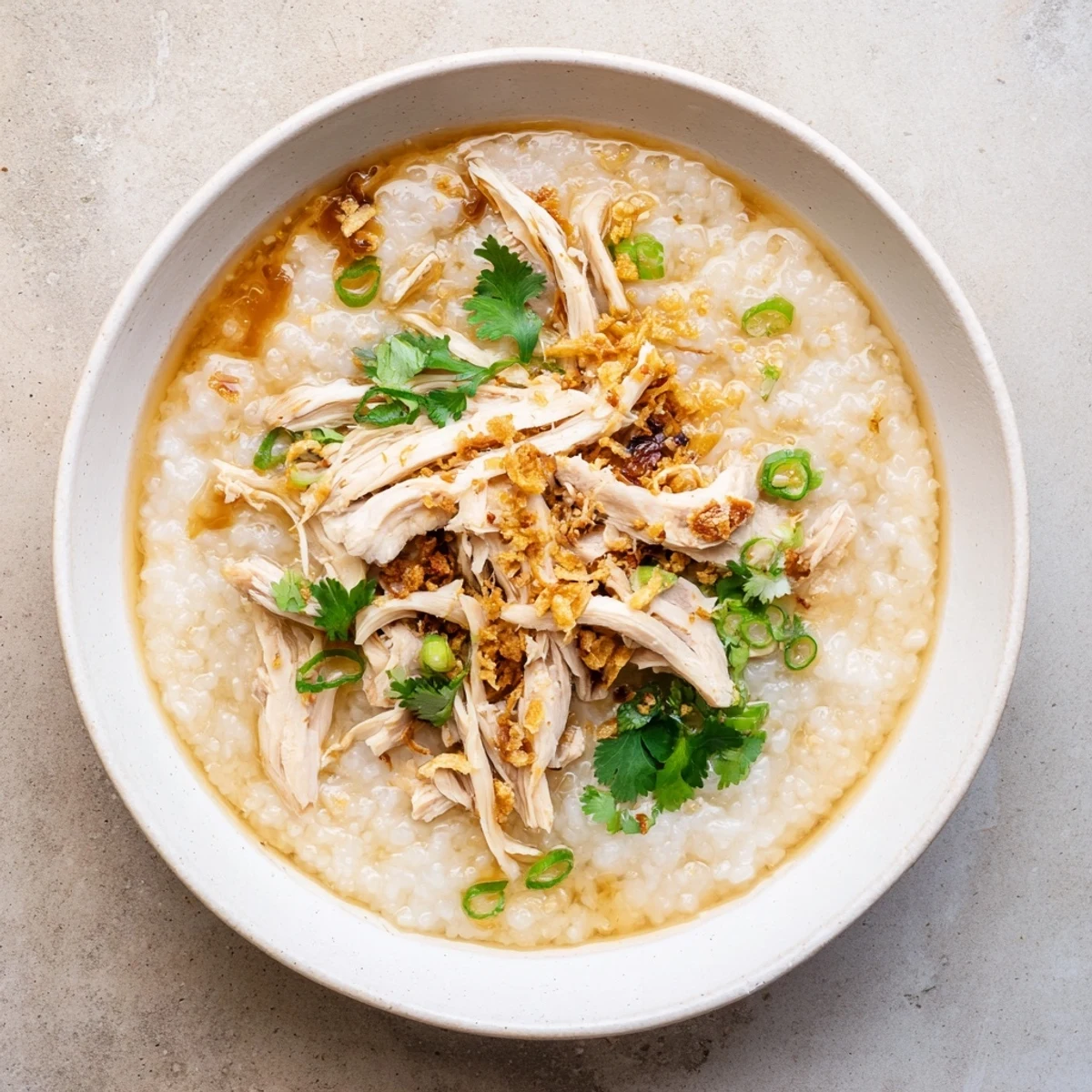
 This traditional Chinese-style rice porridge transforms simple ingredients into something extraordinary. Long-grain rice simmers slowly in rich chicken stock until the grains break down into a silky, creamy consistency. Tender chicken breast cooks alongside aromatic ginger and garlic, infusing every spoonful with warmth. The result is a soothing bowl that's gentle on the stomach yet deeply satisfying.
Customize your bowl with classic toppings like crisp scallions, drizzled soy sauce, and nutty sesame oil. For extra richness, add century eggs or fried shallots. Perfect for breakfast, a light lunch, or whenever you need nourishing comfort food.
The steam from my kitchen window fogged up the glass last Tuesday while a pot of congee bubbled away on the stove. My roommate stumbled out of her bedroom, following the ginger and garlic aroma, asking what smelled like comfort itself. That's the magic of rice porridge—it transforms the most humble ingredients into something that feels like a warm embrace from the inside out.
My grandmother used to make congee whenever anyone in the family fell under the weather, claiming it could heal everything from broken hearts to broken bones. I never understood the obsession until I spent a month recovering from surgery and lived on nothing else. Now I keep a container of rinsed rice in my pantry just for emergencies, both medical and emotional.
Ingredients
- Chicken breasts or thighs: Thighs stay juicier during long simmering, but breasts work perfectly fine if that's what you have on hand
- Long-grain white rice: Rinse thoroughly until water runs clear—this prevents the congee from becoming gummy or gluey
- Chicken stock or water: Stock obviously adds depth, but water lets the ginger and garlic shine through more purely
- Fresh ginger: Peel it with a spoon instead of a knife to avoid wasting the aromatic flesh just beneath the skin
- Garlic cloves: Smash them with the side of your knife so they release their oils more freely into the broth
- Salt and white pepper: White pepper gives that authentic numbing warmth without black specks marring the porcelain appearance
- Garnishes: These aren't optional at all—scallions, soy sauce, and sesame oil are what transform plain porridge into a complete meal
Instructions
- Start the base:
- Combine everything in your largest pot—rice, chicken, ginger slices, smashed garlic, and stock. The pot needs room because rice expands dramatically as it breaks down.
- Bring it to life:
- Crank the heat to medium-high until bubbles break the surface, then immediately drop to the gentlest simmer. Skim off any gray foam that rises to the top—it's just proteins, but removing it keeps the flavor clean.
- Let time work its magic:
- Simmer uncovered for 45 to 60 minutes, stirring every so often to prevent sticking. The rice grains will literally disintegrate, transforming the liquid into something thick and luscious.
- Handle the chicken:
- Pull the chicken out once it's cooked through, about 20 minutes in. Shred it with two forks—it should fall apart effortlessly—then return those strands to the pot.
- Season and serve:
- Stir in your salt and white pepper, tasting as you go. Ladle into bowls immediately and let everyone customize their own toppings at the table.
 Save to Pinterest
 Last winter, during the worst week of flu season, I made a triple batch and delivered containers to three sick neighbors. By noon, my phone was blowing up with texts about how it was the only thing they could keep down. There's something profoundly human about sharing food designed purely for comfort.
The Rice Secret
I've tried every rice variety imaginable—jasmine, basmati, brown, Arborio—but nothing beats plain long-grain white rice for achieving that silky consistency. The grains break down evenly without becoming pasty, creating tiny translucent ribbons that float suspended in the broth.
Customizing Your Bowl
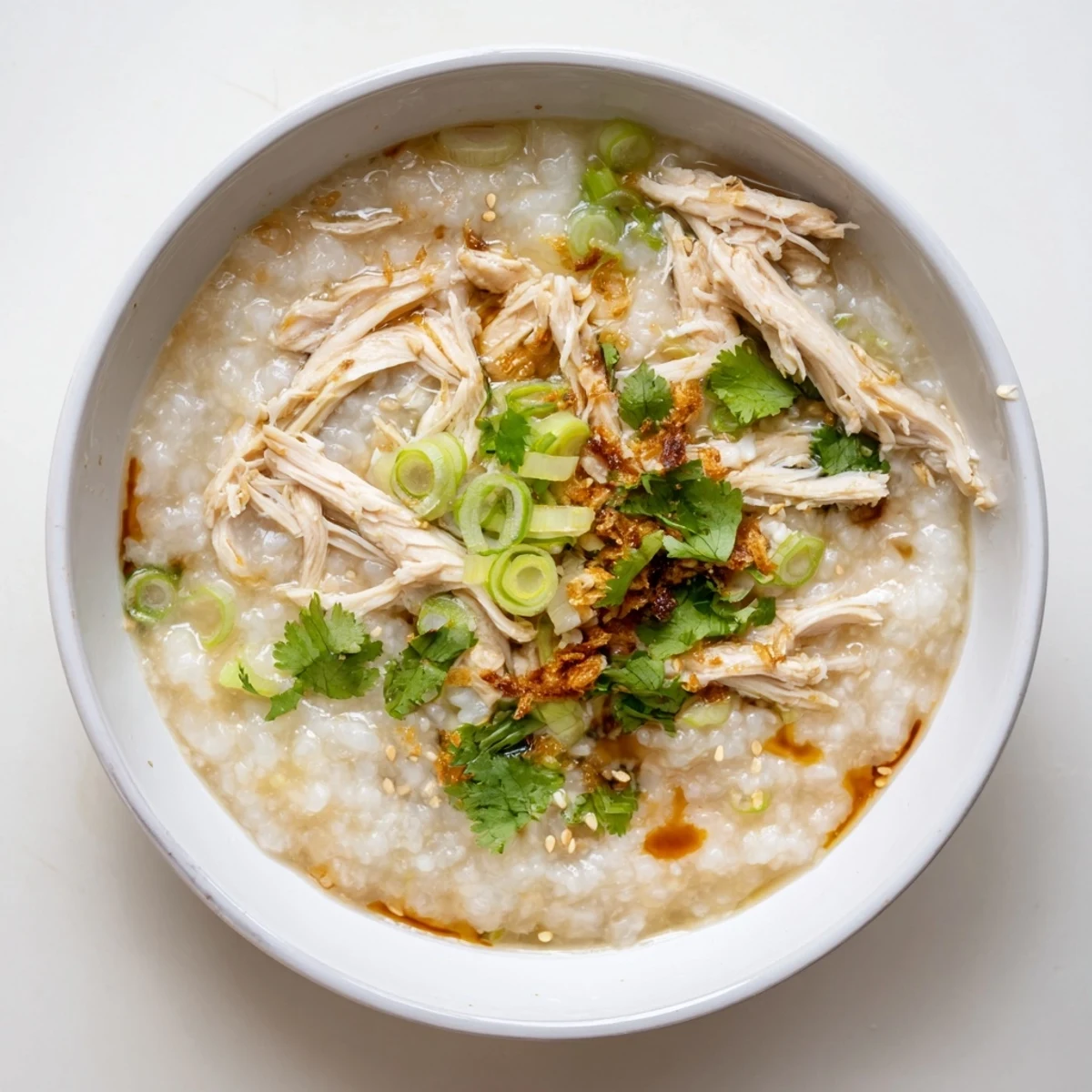
Once you master the basic method, the variations become endless. My current obsession is adding a drizzle of chili crisp oil right before serving, letting the heat bloom into the creaminess. The contrast between mild porridge and sharp spice is absolutely addictive.
Make Ahead Strategy
Congee meal preps better than almost anything else in my kitchen repertoire. The flavors meld and deepen overnight, and it reheats perfectly with just a splash of water to loosen it back up. I often make a batch on Sunday for effortless breakfasts throughout the week.
- Store in the refrigerator for up to five days in airtight containers
- Freeze individual portions for up to three months if you want emergency comfort food
- Always reheat gently, stirring frequently to prevent a skin from forming on top
 Save to Pinterest
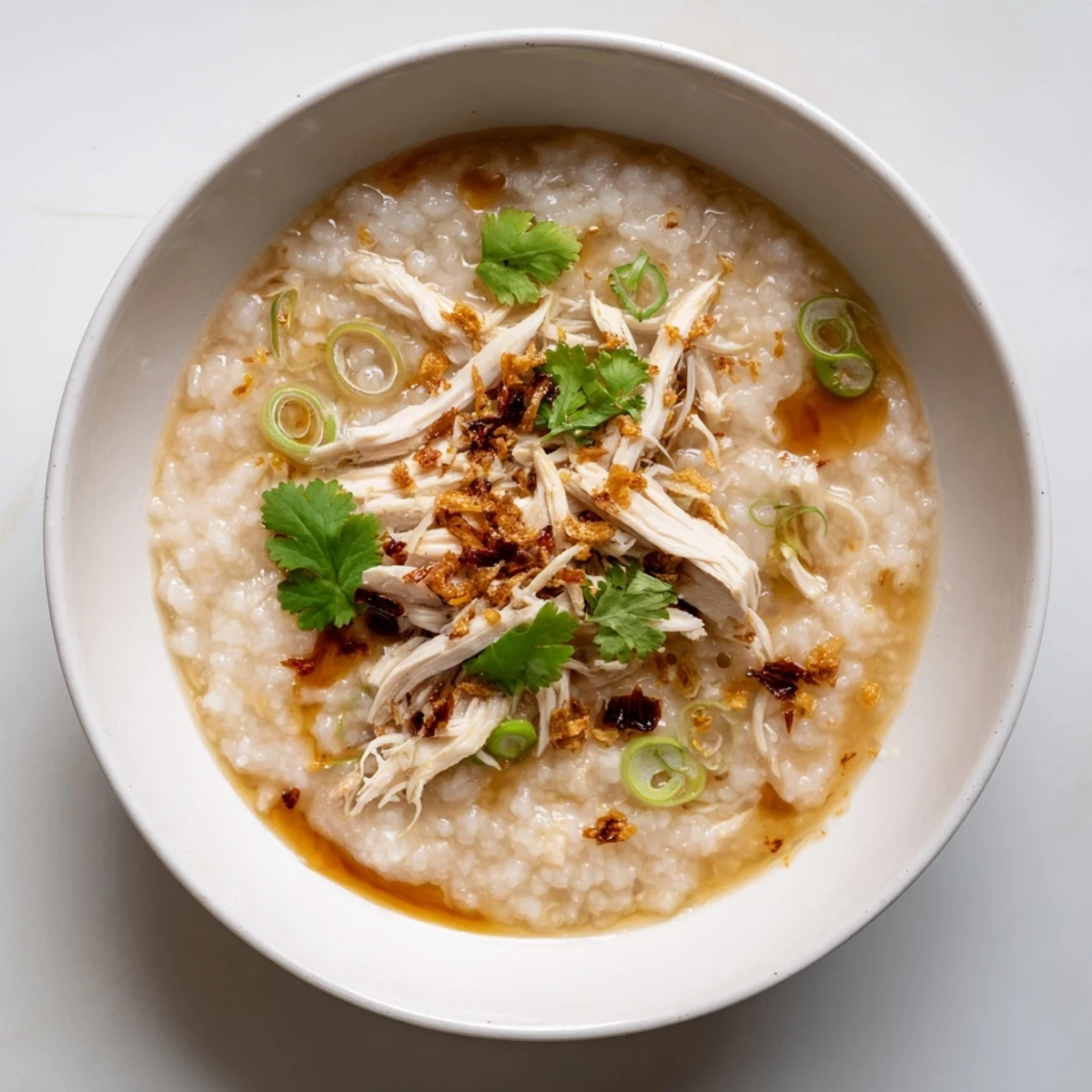
 There's never a wrong time for congee—breakfast, midnight snack, or recovery meal. Something this simple shouldn't taste this extraordinary.
Recipe FAQs
- → What makes congee different from regular rice porridge?
-
Congee has a unique creamy texture achieved by simmering rice until grains completely break down. The ratio of liquid to rice is much higher than typical preparations, creating a smooth, spoonable consistency. Long cooking time allows starches to release naturally.
- → Can I use brown rice instead of white?
-
Brown rice works but requires longer cooking time and more liquid. The texture will be slightly less smooth with more grain integrity. For best results, soak brown rice overnight or increase simmering time by 30-45 minutes until desired creaminess develops.
- → What's the best way to shred the chicken?
-
Remove chicken once fully cooked through, about 20-25 minutes into simmering. Let rest briefly until cool enough to handle. Use two forks to pull apart meat into strands, or shred by hand for more control. Return shredded meat to pot during final minutes.
- → Can I make this in a slow cooker or Instant Pot?
-
Both methods work beautifully. For slow cookers, combine all ingredients and cook on low for 4-6 hours. In an Instant Pot, use high pressure for 25 minutes then natural release. The texture may differ slightly from stove-top but remains delicious and comforting.
- → How long does congee keep in the refrigerator?
-
Store cooled congee in airtight containers for up to 4 days. The porridge thickens significantly when chilled—simply add water or stock while reheating to reach desired consistency. Reheat gently on the stove, stirring frequently to prevent sticking.
- → What protein alternatives work well?
-
Pork, fish, or shrimp make excellent substitutions. Each requires different timing—shrimp needs just 5 minutes, while pork benefits from longer simmering. For vegetarian versions, use mushrooms and vegetable stock, adjusting seasonings to maintain depth of flavor.