
 Save to Pinterest
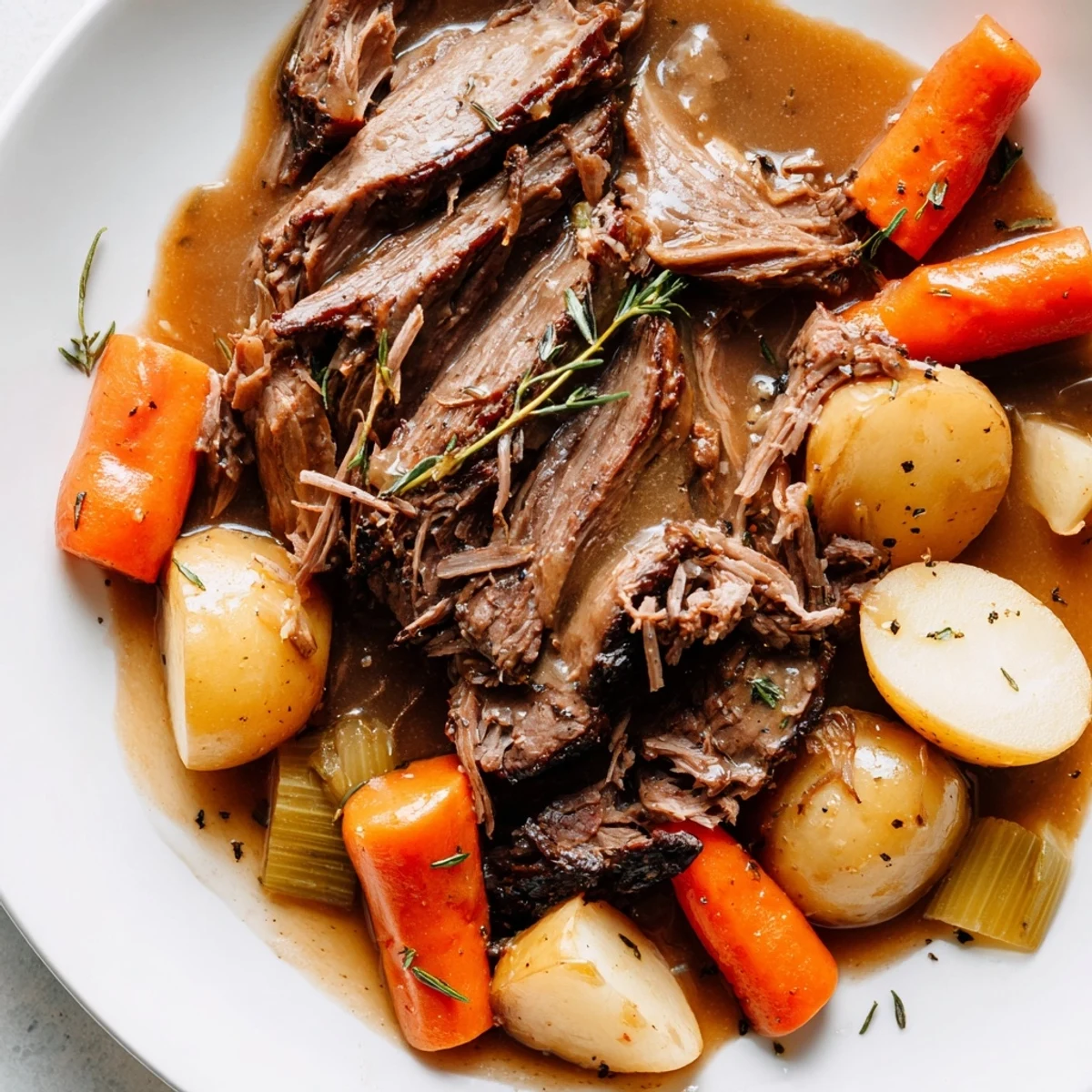
 This classic American pot roast transforms a humble beef chuck into a fork-tender, melt-in-your-mouth centerpiece worthy of any Sunday dinner.
Seasoned and seared to build a deep crust, then slow-braised in a rich combination of red wine, beef broth, and tomato paste, the roast cooks low and slow alongside carrots, potatoes, celery, and onions.
After about 3 hours in the oven, everything emerges perfectly tender, surrounded by a savory, aromatic pan sauce that's perfect for spooning over each serving.
The house smelled like Sunday before I even knew what Sunday meant, and that smell was always pot roast, low and slow in my grandmothers scratched Dutch oven, filling every room with something deep and savory that made you close your eyes without meaning to.
One rainy Tuesday I decided pot roast should not be reserved for weekends, pulled a chuck roast from the freezer, and by evening my roommates were sitting around the table in sweatpants eating like it was a holiday.
Ingredients
- 1 (3 to 4 lb) beef chuck roast: Chuck is the undisputed king of pot roast because its marbling breaks down into pure tenderness over a long braise.
- 3 large carrots, peeled and cut into 2 inch pieces: They go soft and sweet, almost like candy, while soaking up every bit of broth.
- 4 medium Yukon gold potatoes, quartered: Yukon Golds hold their shape better than russets while still getting buttery and tender inside.
- 2 celery stalks, cut into 2 inch pieces: Celery is the quiet backbone of flavor here, doing important work you never notice until you leave it out.
- 1 large yellow onion, sliced: Onions melt into the sauce and give it a natural sweetness you cannot replicate any other way.
- 4 garlic cloves, smashed: Smashed, not minced, because rough pieces hold up and mellow beautifully in the braise.
- 2 cups beef broth: Use gluten free broth if needed, and choose a good quality one, because this is the liquid your entire roast swims in.
- 1 cup dry red wine: Optional but deeply recommended, and a Cabernet or something similar adds a richness that broth alone cannot match.
- 2 tablespoons tomato paste: This small spoonful gives the sauce body and a subtle tang that ties everything together.
- 2 teaspoons kosher salt: Season generously on the meat, because undersalted pot roast is a sadness you cannot fix later.
- 1 teaspoon black pepper: Freshly cracked always, the pre ground stuff tastes like nothing and you deserve better.
- 1 teaspoon dried thyme: Thyme and beef are old friends, and you can taste the familiarity in every bite.
- 1 teaspoon dried rosemary: A little goes a long way and brings a woodsy, wintery fragrance to the pot.
- 2 bay leaves: Do not forget to remove them before serving, unless you enjoy a surprise that tastes like a tree.
- 2 tablespoons olive oil: Just enough to get a hard sear on the meat, which is where half your flavor begins.
Instructions
- Preheat and prep:
- Set your oven to 325 degrees Fahrenheit and let it come to temperature while you work, because a properly heated oven is non negotiable for an even braise.
- Season the roast:
- Pat the chuck roast completely dry with paper towels, then coat all sides with kosher salt and pepper, pressing it in with your hands like you mean it.
- Sear hard and proud:
- Heat olive oil in your Dutch oven over medium high heat until it shimmers, then lay the roast in and do not touch it for three to four minutes per side until you get a deep brown crust that makes you feel like a professional.
- Build the flavor base:
- Take the roast out and drop in the onions, carrots, and celery, stirring for about five minutes until they soften and pick up all the fond left behind.
- Add garlic and tomato paste:
- Stir in the smashed garlic and tomato paste, cooking for just one minute until everything smells rich and slightly sweet.
- Deglaze with wine:
- Pour in the red wine and scrape the bottom of the pot with your spoon, loosening every browned bit, then let it reduce by half, about two to three minutes.
- Bring it all together:
- Return the roast to the pot, tuck the potatoes, thyme, rosemary, and bay leaves around it, then pour in the beef broth until it reaches halfway up the sides of the meat.
- Braise low and slow:
- Bring everything to a simmer on the stovetop, cover with a tight lid, and transfer to the oven for two and a half to three hours, checking near the end until the meat yields completely to a fork.
- Rest and serve:
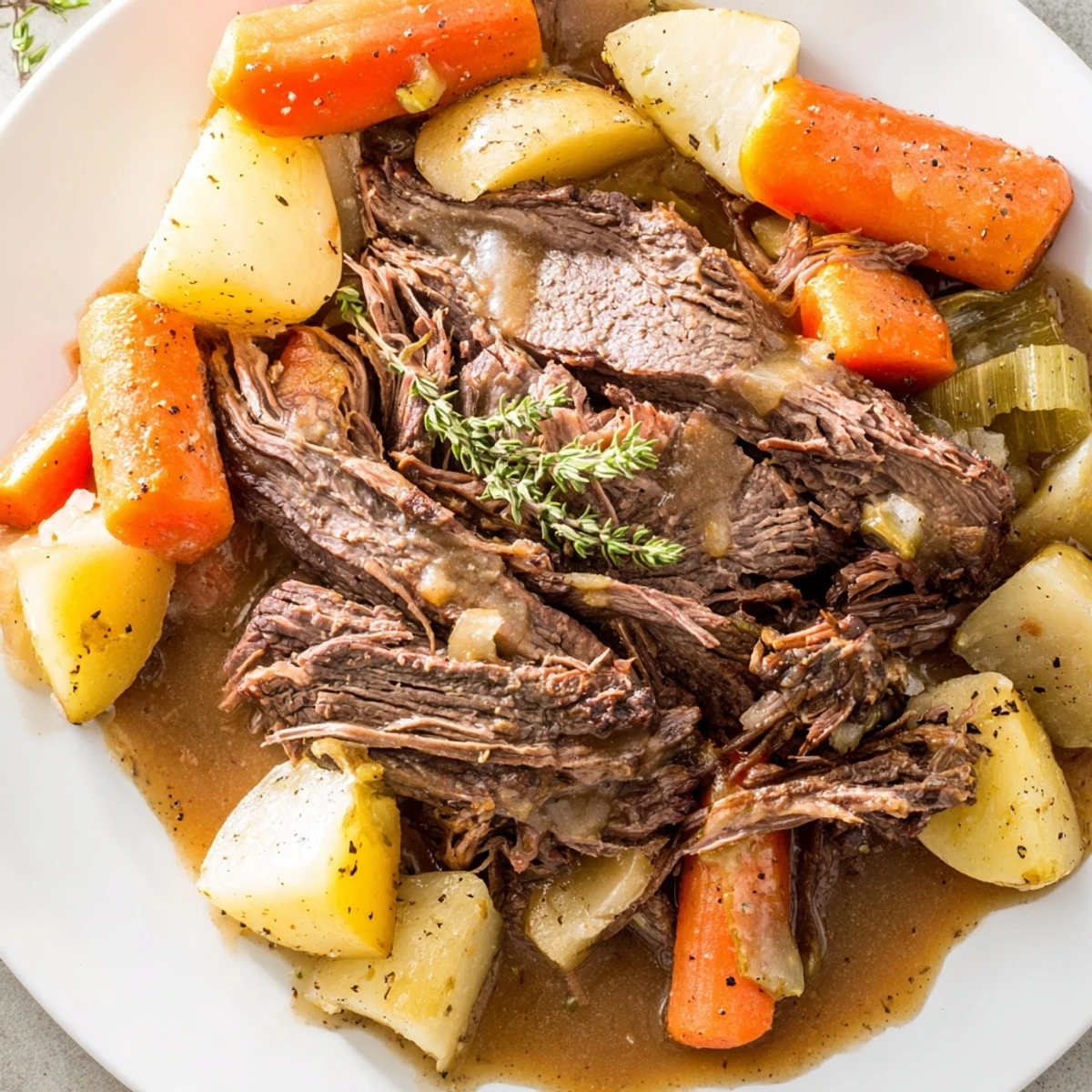
- Remove the roast and vegetables, discard the bay leaves, skim excess fat from the juices if you like, then slice or shred the beef and serve everything drenched in pan sauce.
 Save to Pinterest
 There is something about carrying a heavy pot from the oven to the table, lifting the lid, and watching steam roll out while everyone goes quiet, that makes you feel like you did something truly generous with your time.
Why Chuck Roast is the Right Cut
I once tried making pot roast with a round roast because it was on sale, and the result was exactly the kind of lean, stringy disappointment that teaches you a lesson you never forget.
Making the Sauce Your Own
If the pan juices feel thin, simmer them on the stove and whisk in a slurry of one tablespoon cornstarch and two tablespoons cold water until it coats the back of a spoon like velvet.
Serving and Storing Like a Pro
Leftover pot roast might actually be better the next day, piled onto bread with the sauce spooned over, and it reheats beautifully in a covered dish at 300 degrees Fahrenheit.
- Toss in mushrooms or parsnips during the last hour for an earthy twist.
- Pair with a glass of the same red wine you cooked with for an effortless match.
- Always let the meat rest for ten minutes before slicing so the juices redistribute instead of running out onto the board.
 Save to Pinterest
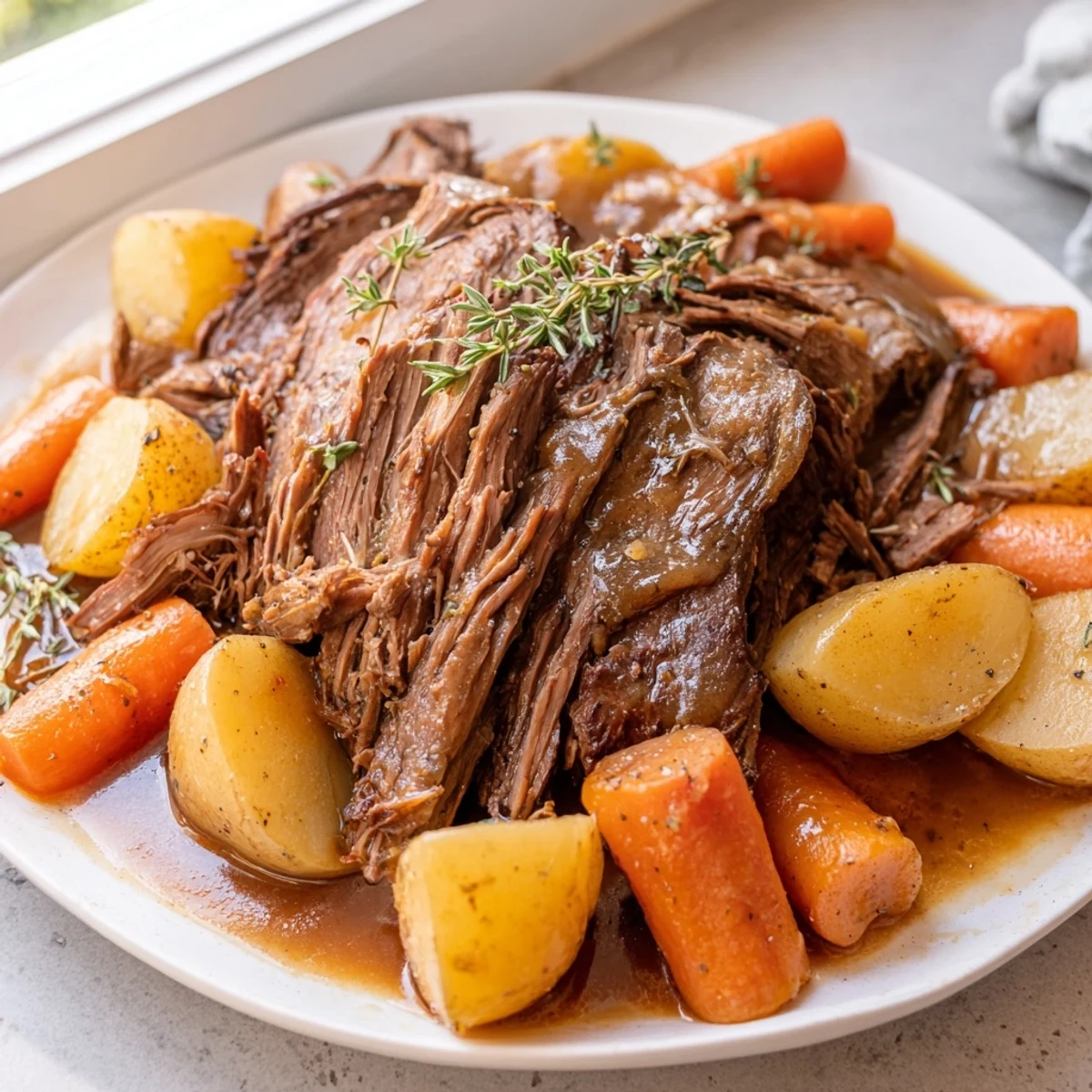
 A good pot roast does not ask much of you, just time and a covered pot, and in return it gives you the kind of meal that makes people linger at the table long after the plates are empty.
Recipe FAQs
- → What cut of beef works best for pot roast?
-
Beef chuck roast is the ideal choice because its marbling and connective tissue break down during slow cooking, resulting in exceptionally tender, flavorful meat. Brisket or round roast can also work, but chuck consistently delivers the best texture and richness.
- → Can I make pot roast without red wine?
-
Absolutely. Simply replace the wine with an equal amount of additional beef broth. The acidity from the tomato paste will still provide depth of flavor. For a hint of brightness, you could also add a splash of balsamic vinegar or lemon juice.
- → Why do I need to sear the roast before braising?
-
Searing creates a Maillard reaction on the surface of the meat, building a deep browned crust and caramelized flavors that infuse the entire dish during braising. Those browned bits left in the pot, called fond, also form the foundation of a rich, flavorful sauce.
- → How do I know when the pot roast is done?
-
The roast is ready when it's fork-tender, meaning a fork slides in and out with almost no resistance. This typically takes 2.5 to 3 hours at 325°F. You can also check for an internal temperature of around 200°F for optimal tenderness.
- → Can I add other vegetables to the pot?
-
Definitely. Mushrooms, parsnips, turnips, and sweet potatoes all make excellent additions. Add heartier root vegetables at the same time as the potatoes, but if using quicker-cooking vegetables like mushrooms, add them during the last hour of cooking so they don't become mushy.
- → How should I store and reheat leftovers?
-
Store the beef and vegetables in an airtight container with the pan juices in the refrigerator for up to 4 days. Reheat gently on the stovetop over low heat or in the oven at 300°F, adding a splash of broth if needed. The flavors often improve the next day.