
 Save to Pinterest
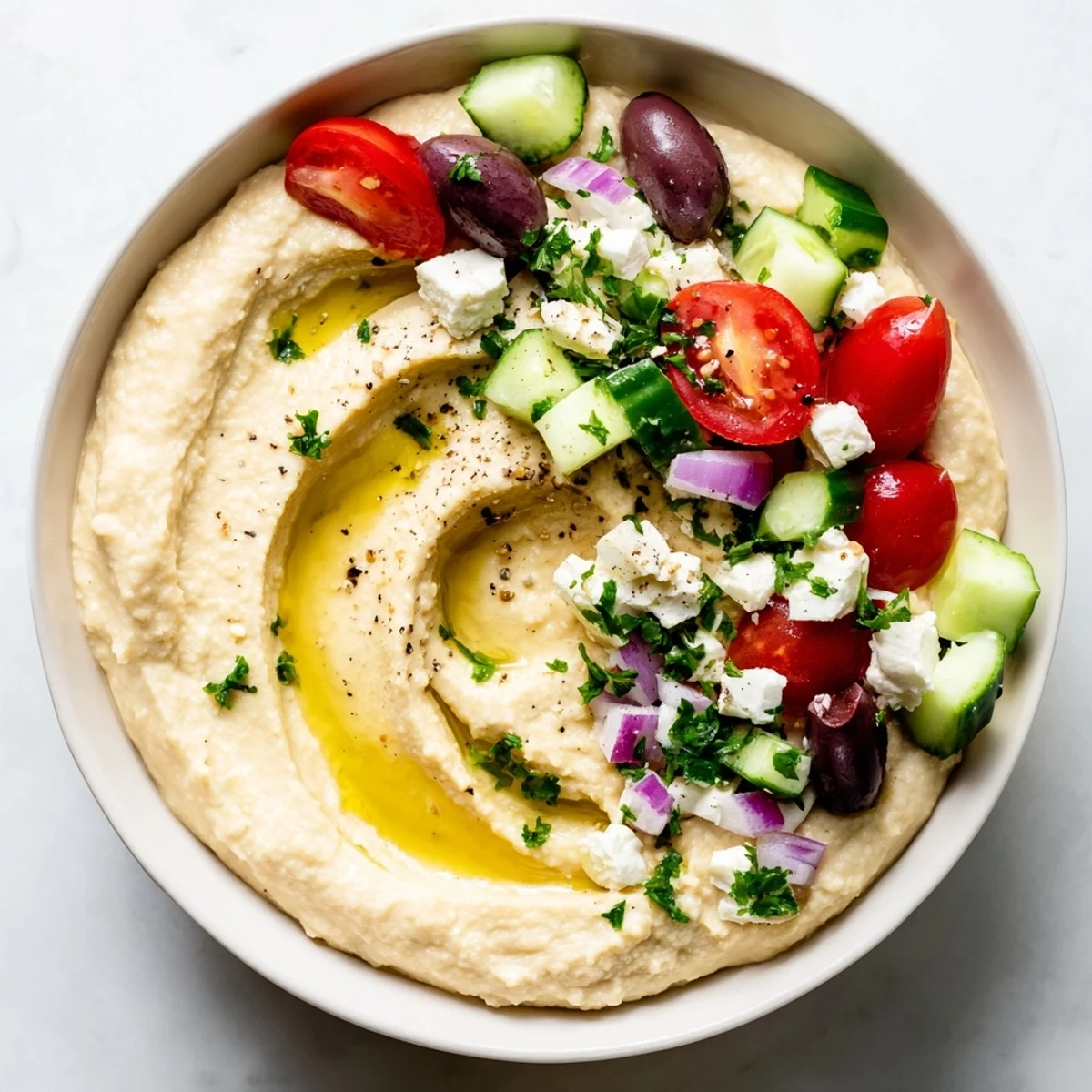
 This vibrant Mediterranean-inspired hummus features an ultra-smooth chickpea base blended with tahini, garlic, and cumin. The creamy foundation gets crowned with colorful fresh toppings including juicy cherry tomatoes, crisp cucumber, briny Kalamata olives, tangy crumbled feta, and aromatic red onion. A final drizzle of olive oil and sprinkle of fresh parsley elevates the presentation while black pepper and optional smoked paprika add depth. Perfect for entertaining or healthy snacking.
Last summer, my neighbor returned from a trip to Athens and couldn't stop talking about the hummus at this tiny taverna by the water. She described it as a meal, not just a dip, piled high with everything fresh from the morning market. I've been making loaded hummus ever since, and honestly, it's changed how I think about appetizers entirely.
I made this for my book club last month and set it on the table with still-warm pita bread. The conversation paused for a solid thirty seconds while everyone just looked at it, then dive in. One friend admitted she'd been full from dinner but couldn't stop eating it anyway.
Ingredients
- Chickpeas: I've learned that rinsing them thoroughly and even removing the skins makes a noticeably smoother hummus
- Tahini: The quality matters here so choose a well-stirred brand with no bitter aftertaste
- Lemon juice: Fresh is absolutely essential and I sometimes add an extra half tablespoon if the lemons seem mild
- Garlic: One clove is perfect but mince it finely so no one gets an unexpected bite of raw heat
- Cold water: This secret ingredient transforms the texture from dense to impossibly creamy
- Cherry tomatoes: They add sweetness and juiciness that balances the rich tahini underneath
- Cucumber: English cucumbers work best since they have fewer seeds and stay crisp longer
- Kalamata olives: Their brine cuts through the creaminess so don't skip them even if you think you don't like olives
- Feta cheese: Use a good quality Greek feta that crumbles easily rather than crumbling into mush
- Red onion: A fine dice is important here so you get flavor without overwhelming crunch
- Fresh parsley: Flat-leaf has better flavor than curly and makes everything look vibrant and finished
Instructions
- Blend the base until impossibly smooth:
- Combine chickpeas, tahini, olive oil, lemon juice, garlic, cumin, salt, and 2 tablespoons cold water in your food processor. Let it run for a full 3 to 4 minutes, scraping down the sides occasionally, until the hummus becomes lighter in color and perfectly creamy. Add more water one tablespoon at a time if it still feels thick or heavy.
- Create the perfect canvas for toppings:
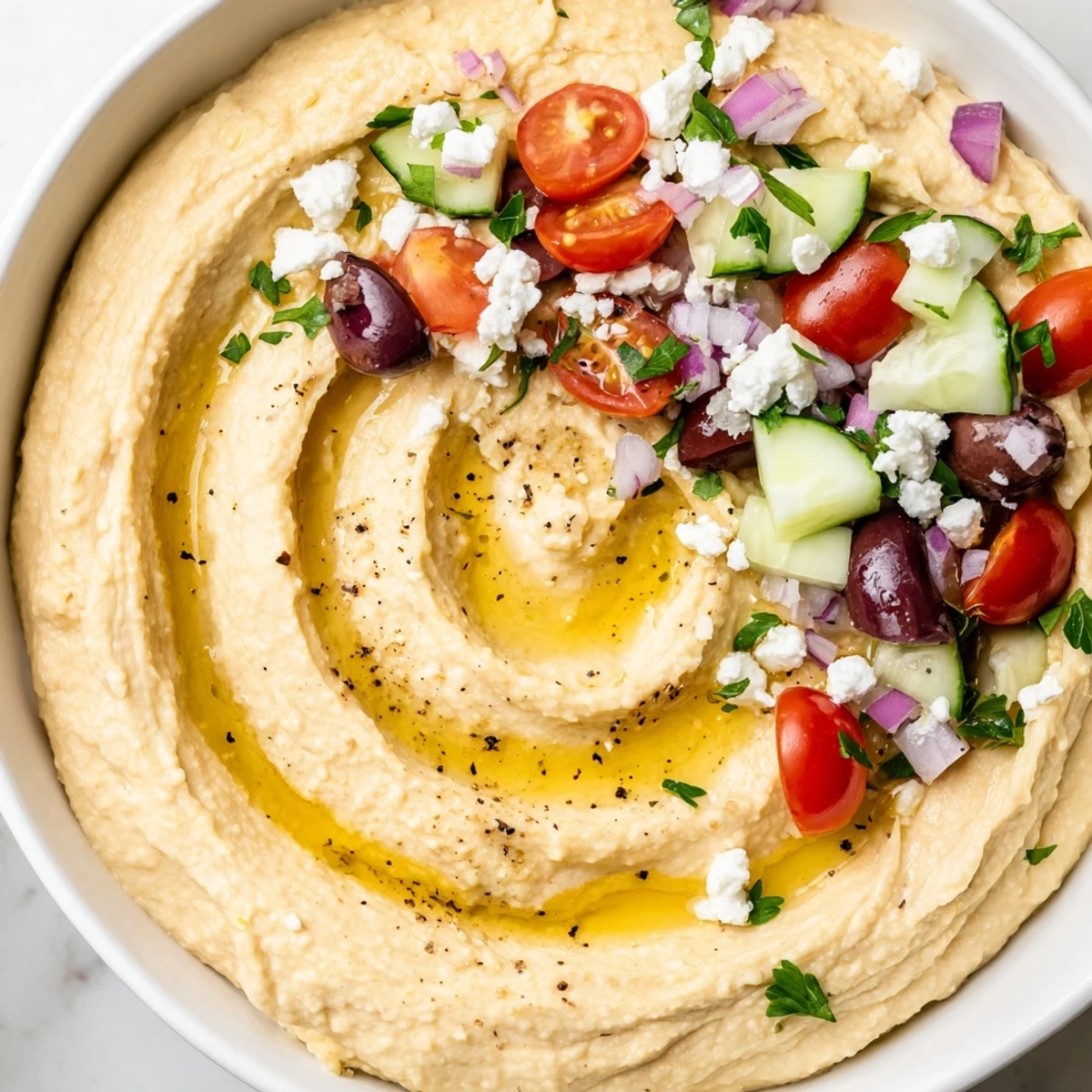
- Spread the hummus onto your serving plate and use the back of a spoon to make a shallow well in the center. This simple step creates little valleys that catch all those delicious toppings and olive oil so every bite is loaded with flavor.
- Pile on the Mediterranean toppings:
- Arrange tomatoes, cucumber, olives, feta, and red onion over the hummus in sections or scatter them artfully. Don't be shy with the toppings since they're what makes this feel special and substantial.
- Finish with a generous drizzle:
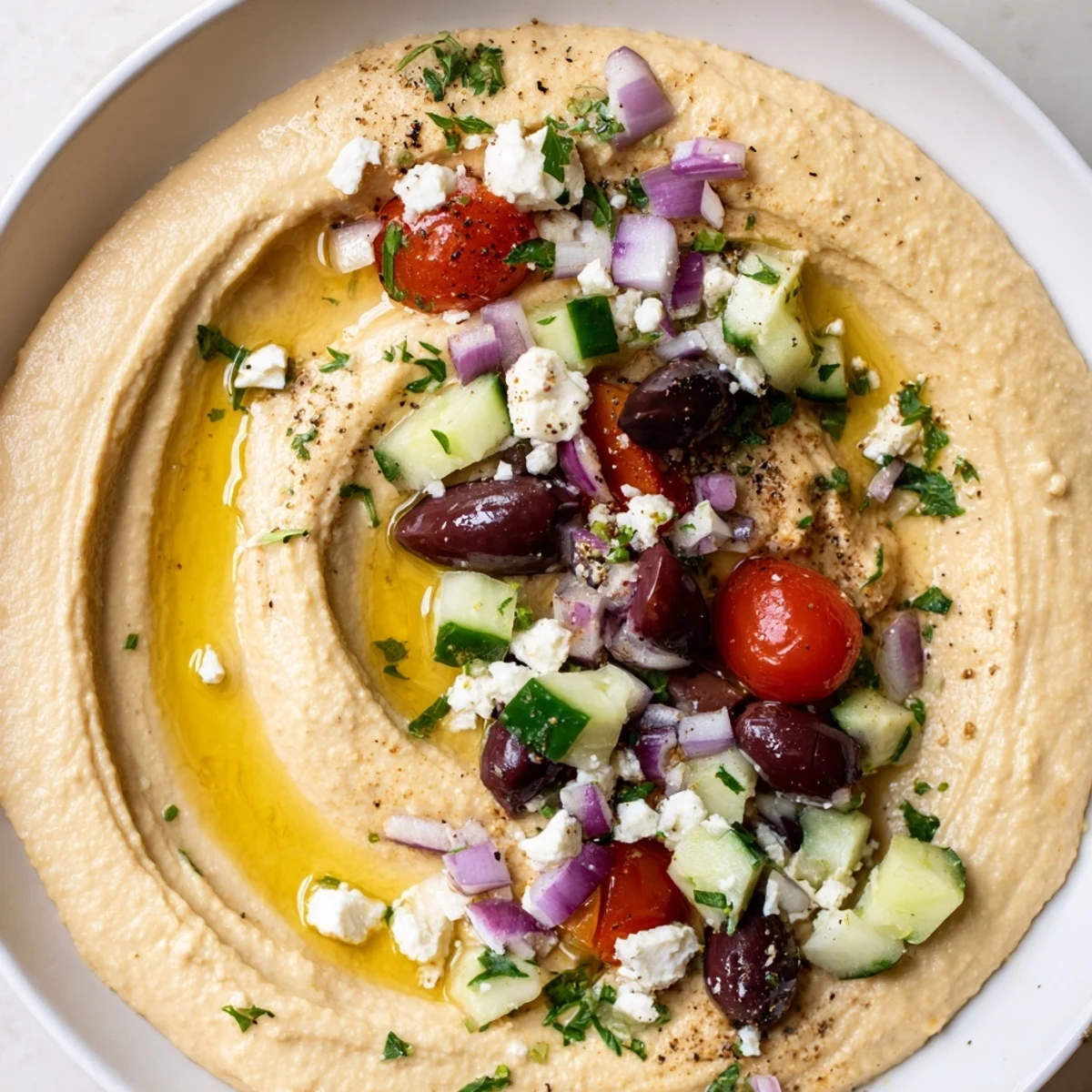
- Give everything a final pour of olive oil and sprinkle with parsley, black pepper, and smoked paprika or sumac if you're using it. The oil should pool slightly in those valleys you created earlier.
- Serve it with confidence:
- Bring this out immediately with warm pita, vegetable sticks, or flatbread while the vegetables are still crisp and cold. Watch how quickly it disappears from the plate.
 Save to Pinterest
 My sister-in-law requested this for her birthday instead of cake, which I think says everything about how addictive it is. We ate it on the back porch as the sun went down, and I remember thinking this is exactly what summer cooking should be.
Making It Your Own
I've discovered that roasted red peppers or grilled eggplant work beautifully as additional toppings. Sometimes I'll add a handful of toasted pine nuts for crunch or swap the parsley for fresh dill depending on what's growing in my garden.
Serving Suggestions That Work
This hummus anchors an entire mezze spread alongside tzatziki, dolmas, and warm olives. I've also served it as a light lunch with a simple green salad and some crusty bread for soaking up every bit.
Make-Ahead Magic
The hummus base keeps beautifully in the refrigerator for up to five days, actually developing deeper flavor over time. I often make a double batch and use it throughout the week for quick lunches or unexpected guests.
- Store the hummus and vegetable toppings separately so nothing gets soggy
- Bring the hummus to room temperature before serving for the creamiest texture
- Refresh the parsley garnish right before serving so it stays vibrant
 Save to Pinterest
 There's something deeply satisfying about turning humble ingredients into something that feels like a celebration. This is the kind of food that brings people together, one scoop at a time.
Recipe FAQs
- → Can I make the hummus ahead of time?
-
Yes, prepare the hummus base up to 3 days in advance and store it in an airtight container. Add the fresh toppings just before serving to maintain their texture and vibrant appearance.
- → What can I use instead of tahini?
-
If you need a tahini substitute, try using Greek yogurt for a creamier texture or cashew butter for a similar nutty flavor profile. Both alternatives work well in this Mediterranean-style spread.
- → How do I achieve the smoothest hummus consistency?
-
Use cold water and blend for several minutes, scraping down the sides periodically. Removing the chickpea skins also creates an exceptionally smooth texture, though this step is optional.
- → What other toppings work well?
-
Roasted red peppers, marinated artichokes, sun-dried tomatoes, pine nuts, or fresh herbs like dill and mint make excellent additions. You can also add diced avocado for extra creaminess.
- → Is this suitable for meal prep?
-
The hummus base stores beautifully for meal prep. Keep it separate from the toppings and assemble portions throughout the week. It's perfect for quick lunches, snacks, or party platters.
- → Can I use dried chickpeas instead of canned?
-
Absolutely. Soak dried chickpeas overnight, then cook until very tender before blending. This method often yields an even creamier result than canned varieties.