
 Save to Pinterest
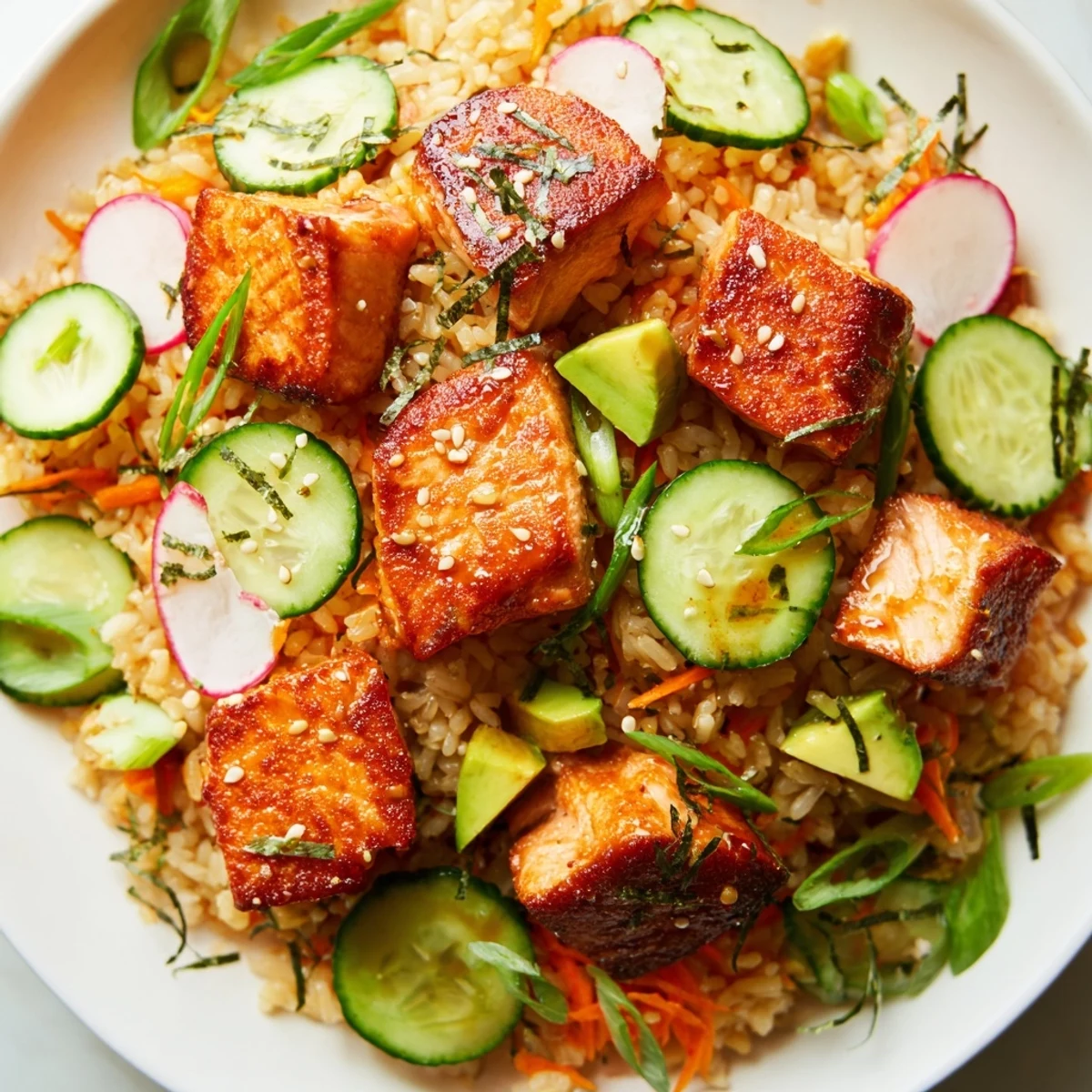
 This vibrant Asian-inspired dish pairs pan-seared salmon cubes—coated in soy sauce, sesame oil, and a light cornstarch dusting for maximum crunch—with fluffy cooled jasmine rice and a rainbow of fresh vegetables including cucumber, carrot, radish, and avocado.
The star of the plate is the homemade ginger dressing, whisked together from rice vinegar, freshly grated ginger, soy sauce, honey, toasted sesame oil, garlic, and a splash of lime juice. It ties every component together with a balance of sweet, tangy, and savory notes.
Finished with toasted sesame seeds, fresh herbs, and optional nori strips or furikake, this dish comes together in about 45 minutes and serves four as a satisfying main course.
My kitchen still smells like toasted sesame oil from three nights ago when I threw this salad together on a whim, and honestly I am not mad about it. The crackle of salmon hitting a hot pan is one of those sounds that makes everyone in the house wander in asking when dinner is ready. This crispy salmon rice salad with ginger dressing turned a random Tuesday into something worth remembering.
I made this for my neighbor who stopped by to return a baking dish and ended up staying for dinner. She took one bite, closed her eyes, and said nothing for about ten seconds, which is the highest compliment any cook can receive.
Ingredients
- Salmon (500 g skin on fillet): Skin on matters here because it crisps up beautifully and holds the cubes together during cooking.
- Soy sauce (1 tbsp for salmon plus 2 tbsp for dressing): Use a good quality one since it is the backbone of both the marinade and the dressing.
- Sesame oil (1 tbsp for salmon plus 2 tbsp toasted for dressing): The toasted version for the dressing adds a deep nutty aroma that regular sesame oil cannot match.
- Black pepper (1 tsp): Freshly ground makes a real difference in giving the salmon a subtle heat.
- Cornstarch (1 tbsp): This is the secret to getting that irresistible golden crust on the salmon without deep frying.
- Jasmine or sushi rice (2 cups cooked and cooled): Cooled rice is essential because warm rice will make the vegetables wilt and turn mushy.
- Cucumber (1 small, thinly sliced): Adds refreshing crunch that balances the richness of the salmon.
- Carrot (1, julienned): Thin strips cook in the residual heat of the rice and bring a natural sweetness.
- Radishes (4, thinly sliced): Their peppery bite cuts through the sweetness of the honey in the dressing.
- Scallions (2, sliced): Use both the white and green parts for layered onion flavor.
- Avocado (1, diced): Creaminess that ties everything together, added last so it does not brown.
- Fresh cilantro or mint (2 tbsp chopped): Either works, and honestly a mix of both is even better.
- Rice vinegar (3 tbsp): The gentle acidity is what makes this dressing bright without being sharp.
- Fresh ginger (1 tbsp grated): Do not skip this, it is the heart and soul of the entire dressing.
- Honey or maple syrup (2 tsp): A touch of sweetness rounds out the vinegar and soy sauce perfectly.
- Garlic (1 clove, minced): One clove is enough, you want it present but not overpowering the ginger.
- Lime juice (1 tsp): Just a splash at the end lifts all the flavors together.
- Toasted sesame seeds (1 tbsp): Sprinkle generously for texture and visual appeal.
- Nori strips or furikake (optional): These take it from homemade to something that feels special and intentional.
Instructions
- Prep the salmon:
- Pat the salmon dry with paper towels until no moisture remains, then cut it into even 2 cm cubes so every piece cooks at the same rate. Toss gently with soy sauce, sesame oil, and pepper, then dust with cornstarch like you are giving each cube a light coat of snow.
- Crisp the salmon:
- Heat a nonstick skillet over medium high heat with a thin layer of oil and wait until it shimmers before adding the salmon skin side down. Cook 3 to 4 minutes per side without fussing with the pieces, letting the crust form naturally until deeply golden.
- Prep the vegetables:
- While the salmon works its magic, slice the cucumber thin as coins, cut the carrot into fine julienne strips, and thinly slice the radishes so their color shows off against the greens. Dice the avocado last so it stays bright green.
- Whisk the ginger dressing:
- In a small bowl combine rice vinegar, grated ginger, soy sauce, honey, toasted sesame oil, minced garlic, and lime juice, whisking until the honey dissolves and everything emulsifies into a silky liquid. Taste it and adjust if you want more ginger or a pinch more sweetness.
- Build the salad:
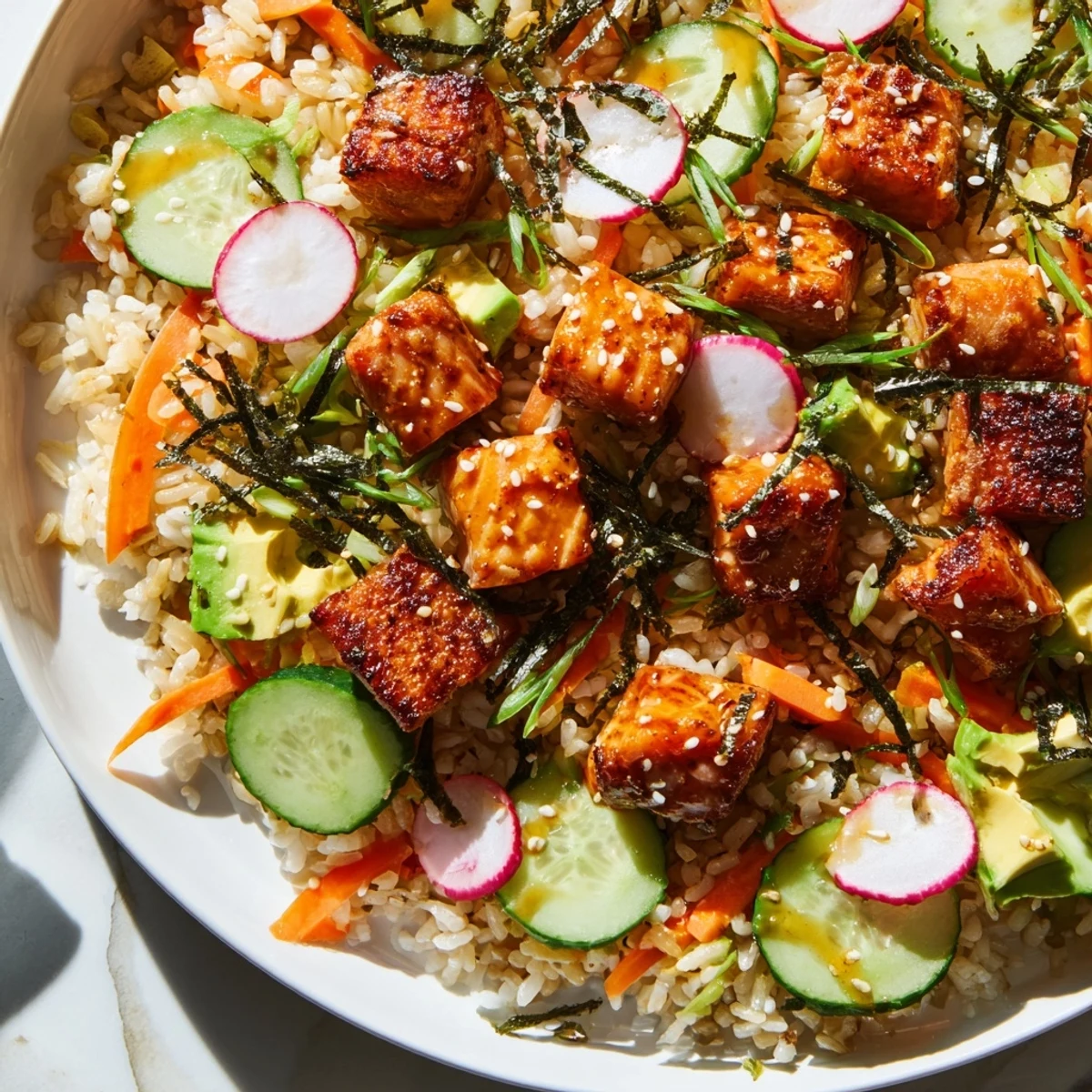
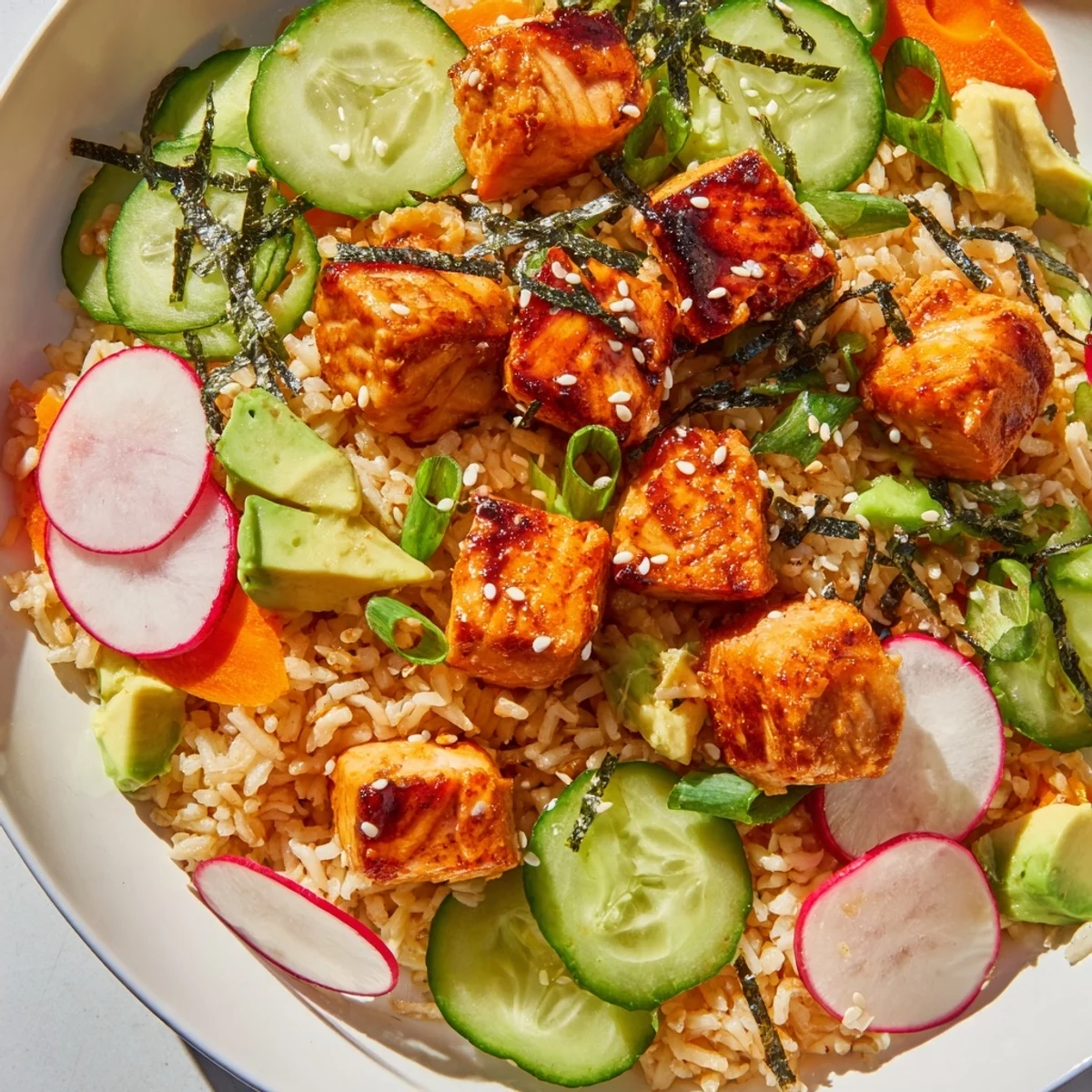
- Spread cooled rice across a large shallow bowl or platter as your foundation, then arrange the cucumber, carrot, radish, scallion, and avocado in colorful clusters on top. Nestle the crispy salmon pieces over everything while they are still warm and crackling.
- Dress and serve:
- Drizzle the ginger dressing generously over the whole platter, scatter herbs, sesame seeds, and nori or furikake across the top, and serve immediately while the salmon skin still snaps when you bite it.
 Save to Pinterest
 The second time I made this, my partner tried to eat it with chopsticks, gave up halfway through, and scooped the last bites directly from the platter with a rice paddle. That moment when a meal breaks down all formality is when you know it is a keeper.
What to Know Before You Start
Have all your vegetables prepped and your dressing whisked before the salmon goes into the pan, because once those cubes are crispy the clock is ticking. The contrast between hot crunchy salmon and cold crisp vegetables is what makes this dish sing, and you do not want to lose that window.
Making It Your Own
Swap the salmon for crispy tofu cubes and use tamari instead of soy sauce and you have a completely plant based version that is just as satisfying. Smoked tofu works particularly well because it brings its own depth of flavor that echoes the original fish.
Serving and Pairing Ideas
This salad is a complete meal on its own but pairs beautifully with a dry Riesling or a tall glass of chilled green tea with lemon. For a dinner party, serve it family style on a big wooden board and let everyone build their own bowl.
- For extra crunch, press sushi rice into small patties and pan fry them until crisp before piling the salad on top.
- Double the ginger dressing and keep the extra in a jar in the fridge for up to a week.
- Remember to check soy sauce labels if you are cooking for anyone with gluten sensitivity.
 Save to Pinterest
 Some dishes earn a permanent spot in your rotation not because they are fancy but because they make a random weeknight feel like you treated yourself. This is one of those, and your kitchen is about to smell amazing.
Recipe FAQs
- → Can I use leftover rice for this dish?
-
Yes, cooled or day-old jasmine rice or sushi rice works perfectly. In fact, cooled rice holds its texture better when assembled with the other components and dressing.
- → How do I keep the salmon crispy after cooking?
-
Pat the salmon completely dry before seasoning, use cornstarch for an extra-crispy coating, and cook skin-side down first in a hot nonstick skillet. Assemble the salad and drizzle the dressing just before serving to maintain crunch.
- → What can I substitute for salmon?
-
Firm white fish like cod or halibut works well with the same preparation. For a plant-based option, smoked or pan-fried tofu cubes seasoned with soy sauce and sesame oil make an excellent alternative.
- → How long does the ginger dressing last?
-
The ginger dressing can be stored in an airtight jar in the refrigerator for up to one week. Whisk or shake well before using, as the sesame oil may separate when chilled.
- → Is this dish gluten-free?
-
It can be. Simply swap regular soy sauce for tamari or a certified gluten-free soy sauce alternative. All other ingredients in the dish are naturally gluten-free.
- → Can I prepare the components ahead of time?
-
Absolutely. You can cook the rice, prepare the vegetables, and whisk the dressing up to a day in advance. Store each component separately in the refrigerator, then cook the salmon fresh and assemble everything just before serving.