
 Save to Pinterest
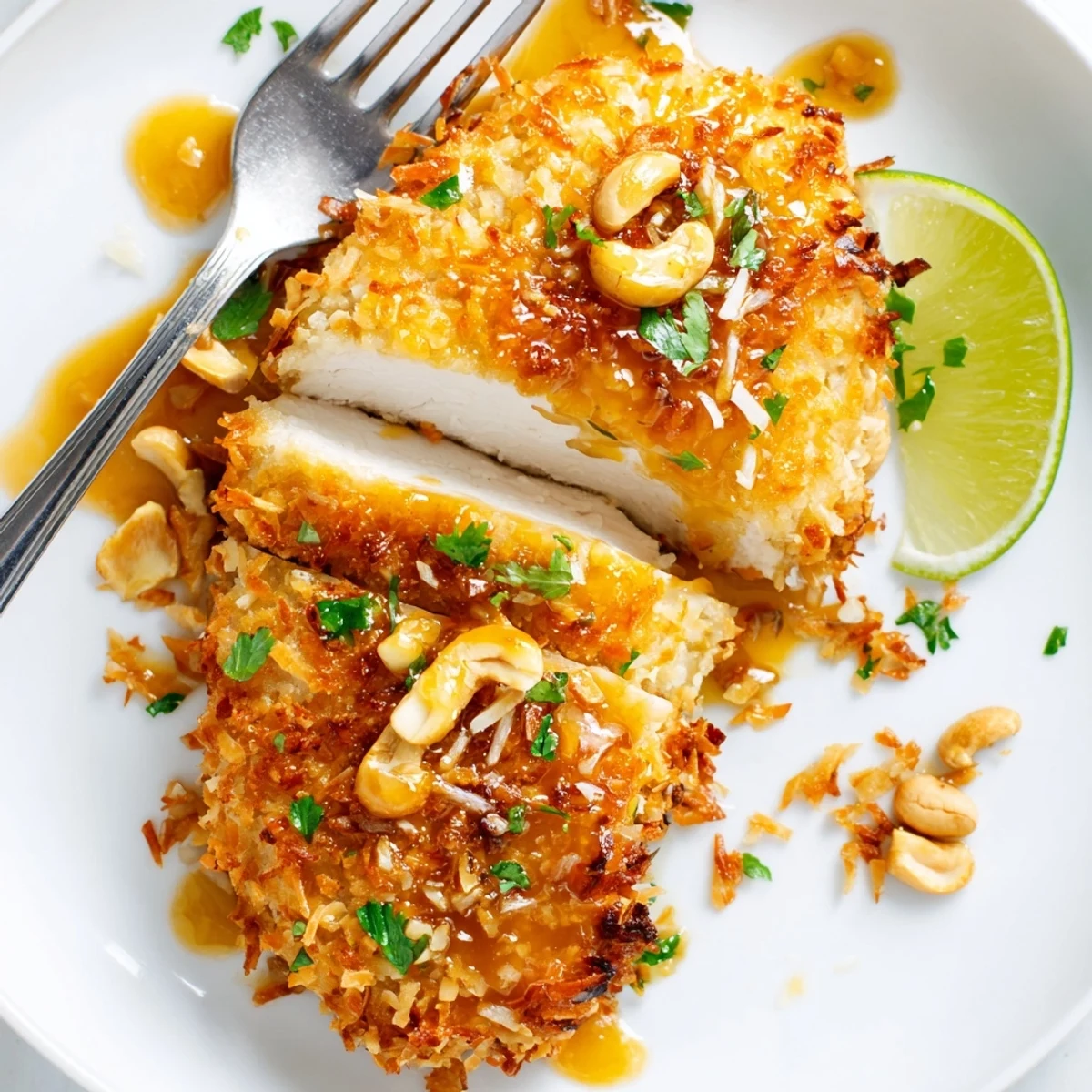
 Coat chicken breasts in gluten-free flour, dip in egg, then press into a mixture of shredded coconut and breadcrumbs for a crunchy crust. Sear briefly in coconut oil, finish in a 400°F oven until juices run clear. Simmer apricot preserves with soy, rice vinegar, Dijon, garlic and ginger until glossy; spoon over hot chicken. Serve with lime and cilantro; pair with jasmine rice or greens for balance.
The sizzle of coconut hitting hot oil is one of those sounds that instantly pulls everyone into the kitchen. I stumbled onto this combination during a rainy Tuesday when I had apricot jam I needed to use up and a bag of shredded coconut staring at me from the pantry. What started as a desperate pantry raid turned into the most requested dinner in my house. That golden crust shattering under a fork while the sweet sauce pools underneath is genuinely hard to stop eating.
My neighbor Linda walked over while I was searing the chicken one evening and ended up staying for dinner. She now texts me every couple of weeks asking when I am making that coconut chicken again. Her husband Dave quietly ate three portions and never said a word, which in my experience is the highest compliment a home cook can receive.
Ingredients
- 4 boneless skinless chicken breasts: Pound them to even thickness so they cook uniformly without drying out at the edges.
- 1 cup shredded unsweetened coconut: Unsweetened is critical here since the sauce brings all the sweetness you need.
- 1/2 cup gluten-free breadcrumbs: These lighten up the crust so the coconut does not feel too heavy or dense.
- 1/2 cup gluten-free flour: This thin flour layer is the glue that holds everything together during searing.
- 2 large eggs: Beaten eggs create the bridge between flour and the coconut breadcrumb coating.
- 1/2 tsp salt and 1/2 tsp black pepper: Season the chicken directly rather than just the flour for better flavor throughout.
- 2 tbsp coconut oil: Coconut oil reinforces the flavor but vegetable oil works perfectly if that is what you have.
- 1 cup apricot preserves: This is the sweet backbone of the sauce so grab a good quality jar.
- 2 tbsp soy sauce: Adds savory depth that balances the fruity sweetness in unexpected ways.
- 1 tbsp rice vinegar: A little brightness cuts through the richness of the coconut crust.
- 1 tbsp Dijon mustard: Just enough to give the sauce a faint kick without making it spicy.
- 1 clove garlic minced: Fresh garlic melted into the sauce adds a warm savory note.
- 1/2 tsp grated fresh ginger: Optional but it brings a gentle warmth that ties everything together.
- 2 tbsp chopped fresh cilantro and lime wedges: For finishing and adding a pop of freshness right at the end.
Instructions
- Get the oven ready:
- Preheat your oven to 400°F and line a baking sheet with parchment paper so nothing sticks during the finish.
- Set up your breading line:
- Place flour in one shallow dish, beaten eggs in another, and combine the coconut with breadcrumbs in a third. Keep everything close together so your hands stay relatively clean.
- Coat the chicken:
- Season the breasts with salt and pepper, then dredge through flour, dip into egg, and press firmly into the coconut mixture. Really press it on there because loose flakes will fall off in the pan.
- Sear until golden:
- Heat coconut oil in a large skillet over medium-high heat and sear each breast for two to three minutes per side until you get a deep golden crust. You are not cooking them through here, just building flavor and texture.
- Finish in the oven:
- Transfer the seared chicken to your prepared baking sheet and bake for fifteen to eighteen minutes until juices run clear and the center is no longer pink.
- Make the apricot sauce:
- While the chicken bakes, combine apricot preserves, soy sauce, rice vinegar, Dijon mustard, garlic, and ginger in a small saucepan over medium heat. Stir for four to five minutes until everything melts into a smooth glossy sauce.
- Serve it up:
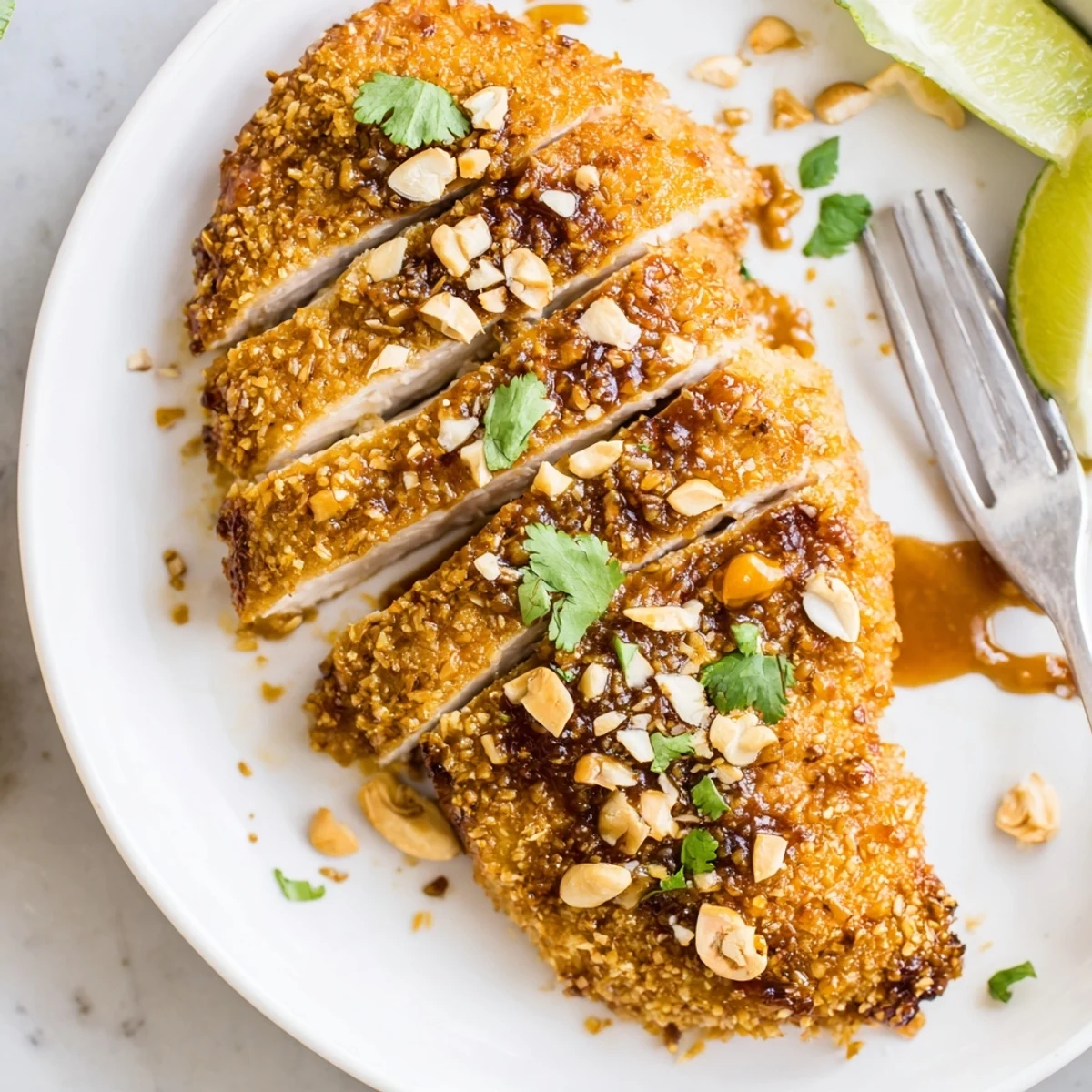
- Drizzle the warm sauce over the hot chicken and scatter cilantro and a squeeze of lime over each plate.
 Save to Pinterest
 The night my daughter helped me make this she pressed the coconut onto the chicken with such intensity that every single piece was perfectly coated. She declared herself the official coconut presser of the household and now refuses to let anyone else do it. Some traditions start in the silliest ways.
What to Serve Alongside
Jasmine rice is the obvious choice because it soaks up that apricot sauce like nothing else. A crisp green salad with a light vinaigrette also works wonders by cutting through the richness of the coconut crust. On cooler evenings I have served this over sauteed greens and nobody complained.
Making It Your Own
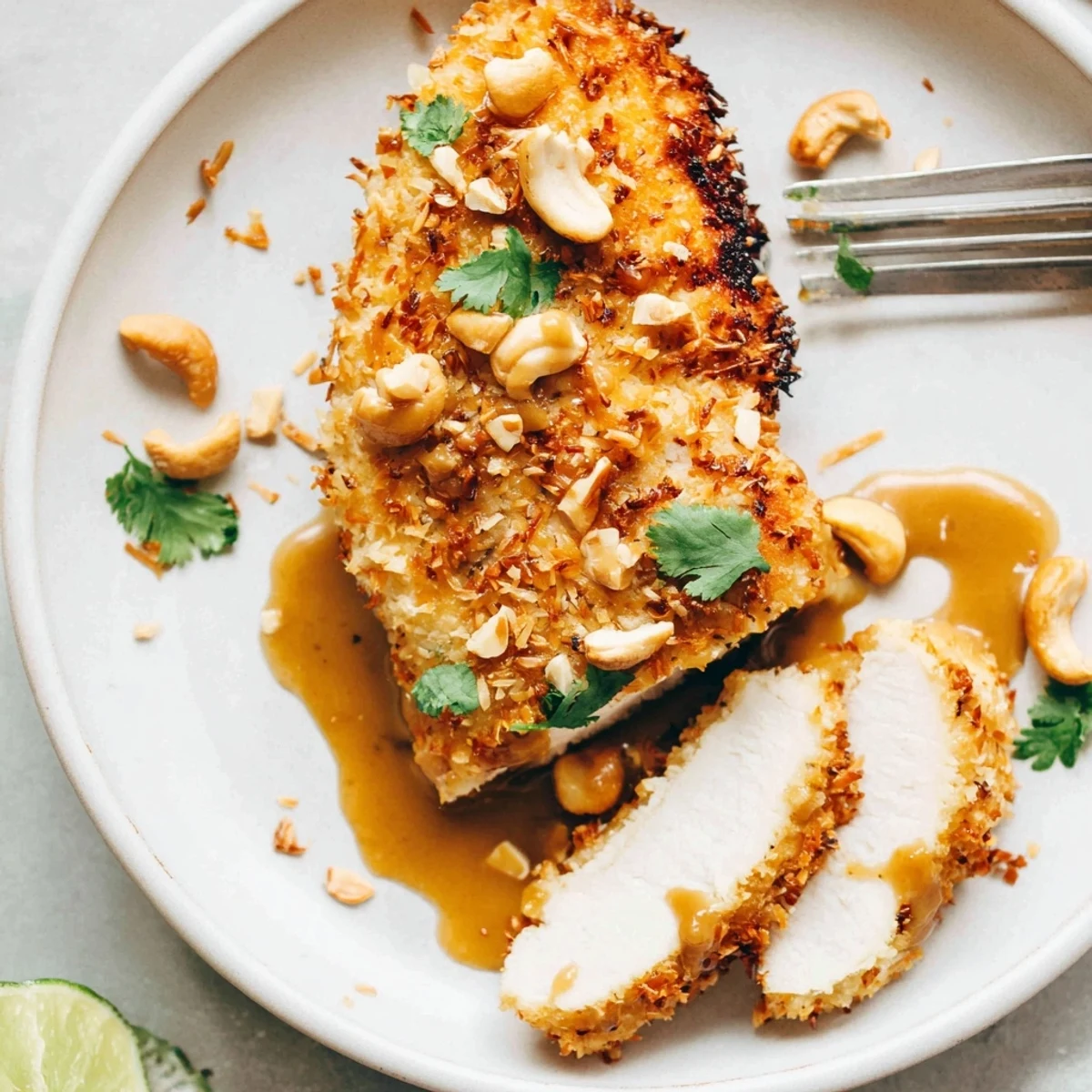
Tossing toasted cashews into the coconut mixture adds an extra layer of crunch that takes this from great to unforgettable. A pinch of red pepper flakes in the sauce is a simple way to wake everything up if you like a little heat. I have also swapped the apricot preserves for mango and it was a completely different and wonderful dinner.
Storage and Reheating
Leftovers keep well in the refrigerator for up to three days and reheat best in a hot oven rather than the microwave which softens the crust. The sauce stores separately in a jar and actually tastes better the next day when the flavors have married.
- Freeze unbreaded chicken with the sauce in a bag for a quick meal prep win.
- Always let the chicken rest five minutes after baking so juices redistribute.
- Double the sauce because you will want extra for drizzling over everything.
 Save to Pinterest
 This is the kind of recipe that makes people think you spent all day cooking when really you just paid attention to a few key moments. Share it generously and watch everyone ask for the recipe.
Recipe FAQs
- → How do I prevent the coconut from burning during cooking?
-
Mix shredded coconut with breadcrumbs to reduce direct exposure, sear on medium-high just until golden, then transfer to the oven to finish. Watch oil temperature and avoid overly high heat on the skillet.
- → What substitutions make this suitable for a gluten-free diet?
-
Use gluten-free all-purpose flour and certified gluten-free breadcrumbs. Swap regular soy sauce for tamari or a gluten-free soy sauce and check all labels for hidden wheat.
- → How can I thicken the apricot sauce if it’s too runny?
-
Reduce the sauce over medium heat until glossy and slightly thickened. For a quicker fix, stir in a small cornstarch slurry (1 tsp cornstarch + 1 tsp water) and simmer until it reaches the desired consistency.
- → Can I use chicken thighs instead of breasts?
-
Boneless, skinless thighs work well and stay moist. Sear to develop color, then bake until the internal temperature reaches 165°F; thighs may need an extra few minutes compared with breasts.
- → What’s the best way to reheat leftovers while keeping the crust crunchy?
-
Reheat in a 350°F oven on a wire rack for 8–12 minutes until warmed through. A brief blast under the broiler for 1–2 minutes can revive the coconut crust’s crispness—watch closely to avoid burning.
- → What side dishes complement the apricot sauce and coconut crust?
-
Pair with jasmine rice or a simple green salad to balance sweetness. Toasted cashews add extra crunch, and lime wedges brighten the dish when squeezed over just before serving.